Turtles, tortoises, and terrapins are often mistaken for the same animal, but each has different needs and living requirements. Turtles spend most of their time in water, tortoises live exclusively on land, and terrapins prefer a combination of aquatic and terrestrial environments. Understanding these differences before bringing one home is essential, as choosing the wrong species is one of the most common mistakes new owners make.
Another important fact is that many pet turtles can live for 20 to 50 years or even longer. As a general guideline, aquatic turtles need approximately 10 gallons of water for every inch of shell length. In this article, we’ll explore some of the best pet turtle species, ranging from smaller aquatic turtles to land-dwelling tortoises that can roam around a garden. Each entry includes essential information and a straightforward description to help you make an informed decision before choosing a pet.
If you want a pet turtle, consider these species.
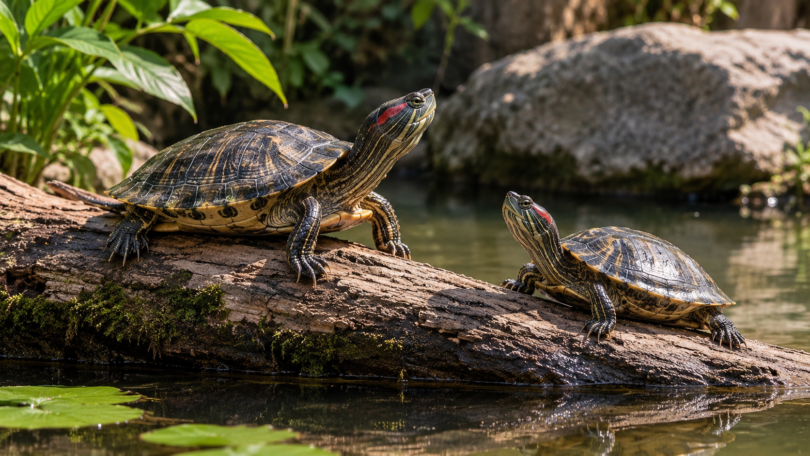
1 - Red-Eared Slider
Species Overview
Common Names: Red-Eared Slider, Red-Eared Terrapin, Red-Eared Turtle, Slider Turtle, Water Slider Turtle
Scientific Name: Trachemys Scripta Elegans
Adult Size: Around 12 Inches
Physical Characteristics: Green And Yellow Markings On Skin And Shell; Red Patch Behind Each Eye
Life Span: 20 To 30 Years
2 - Painted Turtle
Species Overview
Common Names: Painted Turtle, Eastern Painted Turtle, Western Painted Turtle
Scientific Name: Chrysemys Picta
Adult Size: 5 To 10 Inches
Physical Characteristics: Dark Olive Shell With Red And Yellow Edging; Yellow Stripes On The Head And Neck
Life Span: 25 To 30 Years
3 - Common Musk Turtle
Species Overview
Common Names: Common Musk Turtle, Stinkpot Turtle, Stinkpot
Scientific Name: Sternotherus Odoratus
Adult Size: 3 To 5 Inches
Physical Characteristics: Domed Dark Brown Or Gray Shell; Two Pale Stripes On Each Side Of The Head
Life Span: 20 To 30 Years
4 - Eastern Box Turtle
Species Overview
Common Names: Eastern Box Turtle, Common Box Turtle
Scientific Name: Terrapene Carolina Carolina
Adult Size: 5 To 6 Inches
Physical Characteristics: High-Domed Shell With Orange Or Yellow Patterns On A Dark Background; Hinged Lower Shell That Closes Completely
Life Span: 30 To 40 Years, Sometimes Longer
Box turtles live on land, and their hinged shell lets them shut tight like a little treasure chest. They are curious explorers that enjoy rooting through damp soil and leaf litter, so a roomy enclosure with deep substrate and a shallow water dish is a must. Humidity needs to stay fairly high. Their diet is varied: worms, berries, mushrooms, and leafy vegetables. They are long-lived, which means you are making a promise for decades. Buy only captive-bred animals, since wild populations are declining in many regions.
5 - Mississippi Map Turtle
Species Overview
Common Names: Mississippi Map Turtle, Graptemys Kohnii, Map Turtle
Scientific Name: Graptemys Kohnii
Adult Size: Males 4 To 5 Inches, Females 7 To 10 Inches
Physical Characteristics: Olive Shell With Fine Yellow Lines Like A Map; A Small Yellow Spot Behind Each Eye; A Slightly Saw-Toothed Shell Back Edge
Life Span: 15 To 25 Years
The thin yellow lines on this turtle’s shell look like contour lines on a map, which is how it got its name. It is a strong swimmer that appreciates a large tank with clean, well-oxygenated water, and it can be a little shy at first. Map turtles love to bask, so give them a warm, dry platform with good UVB light. Their diet leans toward snails, crayfish, and insects. They need more careful water care than sliders, but the patient owner gets a beautiful, active animal.
6 - Yellow-Bellied Slider
Species Overview
Common Names: Yellow-Bellied Slider, Yellow-Bellied Turtle
Scientific Name: Trachemys Scripta Scripta
Adult Size: 8 To 13 Inches
Physical Characteristics: Yellow Patch Behind Each Eye; Yellow Underside With Dark Spots; Dark Shell With Yellow Stripes
Life Span: 20 To 30 Years
A close cousin of the red-eared slider, the yellow-bellied slider tends to be a bit calmer and less demanding. It has the same fondness for basking and the same need for a large tank, but many keepers find it settles into routine more easily. The yellow patch behind the eye replaces the red one, and the belly is bright yellow with dark markings. Offer a balanced diet of pellets, leafy greens, and the occasional insect or fish. With good filtration and steady heat, it can live two or three decades.
7 - Reeves’ Turtle
Species Overview
Common Names: Reeves’ Turtle, Chinese Pond Turtle, Chinese Three-Keeled Pond Turtle
Scientific Name: Mauremys Reevesii
Adult Size: 5 To 6 Inches
Physical Characteristics: Brown To Olive Shell With Three Ridges Along The Back; Striped Head With Yellow And Green Lines
Life Span: 20 To 30 Years
Reeves’ turtle is a small, hardy water turtle that handles cooler temperatures better than most. That makes it a good fit if you plan to keep it outdoors in a pond during warmer months. It is lively, not too shy, and easy to feed, accepting pellets, insects, and plants. The three ridges on its shell give it a distinctive look, and males often darken with age. A tank of 40 gallons or more with a basking dock will keep one healthy. It is an underrated choice for beginners who want a smaller turtle.
8 - Spotted Turtle
Species Overview
Common Names: Spotted Turtle
Scientific Name: Clemmys Guttata
Adult Size: 4 To 5 Inches
Physical Characteristics: Black Shell Dotted With Small Yellow Spots; Spots Also On Head And Legs
Life Span: 30 Years Or More
With its glossy black shell sprinkled with yellow dots, the spotted turtle looks like something out of a storybook. It is small, gentle, and spends time both in shallow water and on land. A shallow aquatic setup with a large dry area suits it best, and the water should stay cool and clean. Because wild spotted turtles are protected or declining in many places, always check your local laws and buy only from a reputable captive breeder. It is not the cheapest turtle, but for a keeper who wants something special, it is hard to beat.
9 - Russian Tortoise
Species Overview
Common Names: Russian Tortoise, Horsfield’s Tortoise, Afghan Tortoise, Steppe Tortoise
Scientific Name: Testudo Horsfieldii
Adult Size: 8 To 10 Inches
Physical Characteristics: Rounded, Tan To Olive Shell With Dark Blotches; Four Claws On Each Front Foot
Life Span: 40 Years Or More
This is one of the most popular tortoises for beginners, and for good reason. It stays small, tolerates a range of conditions, and has a lot of personality. Russian tortoises love to dig, so give them deep, dry substrate and a hide to retreat into. Their diet should be mostly weeds and leafy greens such as dandelion and endive, not fruit. They need plenty of floor space instead of height, a basking lamp, and UVB lighting. If you provide those basics, you will have a companion that could outlive you.
10 - Greek Tortoise
Species Overview
Common Names: Greek Tortoise, Spur-Thighed Tortoise, Mediterranean Spur-Thighed Tortoise
Scientific Name: Testudo Graeca
Adult Size: 5 To 8 Inches
Physical Characteristics: High-Domed Shell In Yellow And Black; Small Spurs On The Back Of Each Thigh
Life Span: 50 Years Or More
The Greek tortoise has a golden, patterned shell and a calm, steady nature. It is happiest in a dry, warm setup with lots of sunlight, whether that is a garden pen in warm weather or a large indoor table with proper lighting. It grazes on weeds, grasses, and flowers, and it needs a little calcium from cuttlebone or supplements. Because it can live half a century, think of it as a long-term family member. Wild populations are under pressure, so choose a captive-bred animal with clear paperwork.
11 - Hermann’s Tortoise
Species Overview
Common Names: Hermann’s Tortoise
Scientific Name: Testudo Hermanni
Adult Size: 5 To 8 Inches
Physical Characteristics: Rounded Yellow-Brown Shell With Dark Patches; A Scaled Tail Tip Ending In A Small Spur
Life Span: 50 Years Or More
Hermann’s tortoise is gentle, steady, and easy to like. It spends its days grazing, basking, and wandering the enclosure at a slow pace. Outdoor space is ideal when the weather allows, with shelter from heat and rain. Keep the diet high in fiber with weeds, grasses, and leafy greens, and go easy on sweet fruit. Hatchlings need extra care with humidity and calcium so the shell grows smoothly. This is a good choice for someone who wants a quiet pet and is ready for a decades-long friendship.
12 - Red-Footed Tortoise
Species Overview
Common Names: Red-Footed Tortoise, Red-Foot Tortoise
Scientific Name: Chelonoidis Carbonarius
Adult Size: 10 To 14 Inches
Physical Characteristics: Dark Shell With Pale Patches; Bright Red Or Orange Scales On The Legs And Head
Life Span: 50 Years Or More
The red-footed tortoise is a tropical species with a sociable, almost dog-like attitude. Many keepers say it comes to greet them at feeding time. It needs warmth and humidity, so a large enclosure with moist substrate and a shaded hide is key. Unlike many tortoises, it enjoys a varied diet that includes fruit, leafy greens, and a little protein. It grows bigger than the Mediterranean species, so plan for a spacious pen. For a keeper with room and patience, it is a charming, colorful companion.
13 - Razorback Musk Turtle
Species Overview
Common Names: Razorback Musk Turtle, Keeled Musk Turtle
Scientific Name: Sternotherus Carinatus
Adult Size: 4 To 5.5 Inches
Physical Characteristics: Sharp Ridge Along The Center Of A Tent-Shaped Shell; Mottled Brown And Gray Head With Small Markings
Life Span: 20 To 30 Years
The razorback musk turtle gets its name from the pointed ridge running down its high, roof-like shell. It is a quiet, bottom-walking turtle that likes cool, clean water with plenty of hiding spots. A 40-gallon tank is enough for an adult, and a low basking platform helps. It eats snails, worms, and pellets, and it is happy to scavenge on the tank floor. It can be a little shy and a little feisty, but it rewards a patient owner with a long, low-drama life.
14 - Chinese Stripe-Necked Turtle
Species Overview
Common Names: Chinese Stripe-Necked Turtle, Asian Yellow Pond Turtle
Scientific Name: Mauremys Sinensis
Adult Size: 8 To 10 Inches
Physical Characteristics: Brown Shell; Neck Covered In Thin Yellow And Dark Stripes
Life Span: 20 To 30 Years
With its fine striped neck, this turtle is one of the neatest-looking water turtles you can keep. It is active and fairly bold, and it takes to captivity well when given a big tank, strong filtration, and a dry basking area. Adults become larger than many beginners expect, so plan the setup before bringing one home. It eats pellets, insects, and leafy plants, and its appetite is rarely a problem. If you like the look of a slider but want something a little different, this is a good alternative.
15 - Eastern Mud Turtle
Species Overview
Common Names: Eastern Mud Turtle, Mud Turtle
Scientific Name: Kinosternon Subrubrum
Adult Size: 3 To 5 Inches
Physical Characteristics: Smooth, Plain Olive To Dark Brown Shell; Yellowish Head With Faint Mottling
Life Span: 20 To 30 Years
The eastern mud turtle is a small, plain-looking species that makes up for its simple colors with an easygoing nature. It likes shallow water, soft substrate, and a gentle slope so it can move between land and water. A 20- to 30-gallon setup fits an adult comfortably. Feed it worms, snails, and pellets, and offer a spot to bask. Because it is small and unfussy, it suits keepers who want a low-key aquatic turtle without a huge tank. Like most turtles, it enjoys being watched more than being picked up.
Turtles to Avoid as Pets
Keeping a turtle is a long-term commitment, so there are three important things to consider before bringing one home: the size of its tank or enclosure, proper UVB lighting and heating, and the wildlife regulations in your area. Remember that reptiles can carry bacteria such as Salmonella, so always wash your hands thoroughly with soap after handling a turtle or cleaning its tank. This is especially important in households with children.
Always choose captive-bred turtles and never release a pet turtle into the wild, a river, or a canal, as this can harm local wildlife and disrupt natural ecosystems. With proper preparation and responsible care, your turtle can remain a companion for many years. Do your research first, prepare a suitable habitat, and only then welcome your new shelled companion home.