
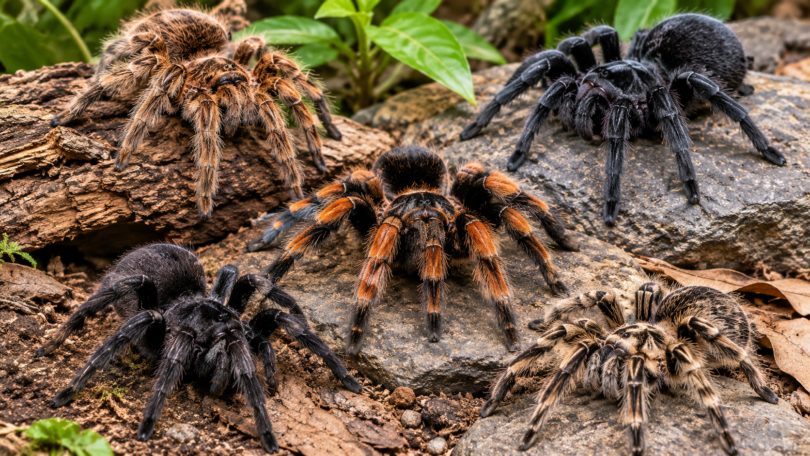
Why Your First Tarantula Matters
1 - Chilean Rose (Grammostola rosea)
Species Overview
- Length: 5 To 6 Inches
- Weight: 1.5 To 2 Ounces
- Physical Characteristics: Brown-Tan Body Covered In Soft Pinkish Hairs, With A Darker Carapace And A Slightly Rosy Glow On The Legs When Fresh From A Molt
2 - Mexican Red Knee (Brachypelma hamorii)
Species Overview
- Length: 5 To 6 Inches
- Weight: 1.5 To 2.5 Ounces
- Physical Characteristics: Jet-Black Body With Bright Orange-Red Bands On Each Leg Joint And A Rusty Fringe Of Hairs On The Abdomen
3 - Curly Hair Tarantula (Tliltocatl albopilosus)
Species Overview
- Length: 5 To 6 Inches
- Weight: 1 To 1.5 Ounces
- Physical Characteristics: Dark Brown To Black Body Covered In Long, Curled Golden-Bronze Hairs That Give It A Fuzzy, Teddy-Bear Look
4 - Brazilian Black (Grammostola pulchra)
Species Overview
- Length: 5.5 To 6 Inches
- Weight: 2 To 3 Ounces
- Physical Characteristics: Deep Velvety Black Body With A Soft, Almost Glossy Look And A Slight Bronze Shine On The Carapace After A Molt
Many keepers call this the friendliest tarantula in the hobby. The Brazilian Black is large, heavy-bodied, and remarkably calm, and it rarely flicks hairs or shows any aggression. That makes it a great choice if you are nervous about your first spider. It does grow slowly, and young ones may sit in a hide for days, but that is typical behavior. Give it room to burrow, keep humidity moderate, and don’t overfeed it. Because it is so mellow, it is also a popular choice for people who want to watch rather than handle. A healthy female can live over 20 years.
5 - Chaco Golden Knee (Grammostola pulchripes)
Species Overview
- Length: 5.5 To 6 Inches
- Weight: 2 To 3 Ounces
- Physical Characteristics: Black Body With Cream-Gold Stripes Across The Leg Joints And A Pale Golden Carapace With Fine, Light Hairs
6 - Pink Zebra Beauty (Eupalaestrus campestratus)
Species Overview
- Length: 5 To 6 Inches
- Weight: 1.5 To 2 Ounces
- Physical Characteristics: Chocolate-Brown Body With Pale Pink-Tan Stripes Along The Legs And A Smooth, Slightly Shiny Carapace
7 - Mexican Red Rump (Tliltocatl vagans)
Species Overview
- Length: 5 To 6 Inches
- Weight: 1.5 To 2 Ounces
- Physical Characteristics: Black Body And Legs With A Dense Patch Of Reddish-Orange Hairs Across The Abdomen
The Mexican Red Rump is tough, tolerant, and easy to feed, which is why many keepers buy one as a first tarantula. Its black body and red-orange abdomen look striking against light substrate. It grows faster than most, and it forgives small errors in temperature and humidity. The downside is its attitude: it is a heavy hair-kicker, and some individuals can be more skittish than the Red Knee. If you can respect that, you get a bold, active spider that often sits out in the open. Use a moderately deep substrate and keep one side of the tank slightly damp.
8 - Mexican Fireleg (Brachypelma boehmei)
Species Overview
- Length: 5 To 5.5 Inches
- Weight: 1 to 1.5 Ounces
- Physical Characteristics: Black Carapace And Legs With Bright Orange-Red On The Leg Joints And A Vivid Orange-Red Abdomen
9 - Costa Rican Zebra (Aphonopelma seemanni)
Species Overview
- Length: 4.5 To 5 Inches
- Weight: About 1 Ounces
- Physical Characteristics: Black Body With Thin White-Cream Stripes Down Each Leg And A Light Patch Of Hairs Across The Carapace
This striped tarantula is easy to keep but a little less relaxed than the species above. The Costa Rican Zebra is hardy and adapts well, yet it can be quick and skittish, so move slowly around its tank. It is also an enthusiastic burrower, and a deep substrate will let it build a tunnel it feels safe in. It handles normal room temperatures well and doesn’t need heavy misting. A younger spider may be shy, but it often becomes bolder as it ages. For someone who wants a bit more energy without moving into the risky species, this is a solid middle step.
10 - Pumpkin Patch (Hapalopus sp. “Colombia Large”)
Species Overview
- Length: 2.5 To 3 Inches
- Weight: About 0.2 Ounces
- Physical Characteristics: Bright Orange Abdomen With Dark Markings, A Tan To Brown Carapace, And Slim, Light Legs
11 - Texas Brown (Aphonopelma hentzi)
Species Overview
- Length: 4 To 5 Inches
- Weight: 1 To 1.5 Ounces
- Physical Characteristics: Uniform Tan To Chocolate-Brown Body With Slightly Darker Legs And A Fine, Soft Layer Of Hair
12 - Arizona Blonde (Aphonopelma chalcodes)
Species Overview
- Length: 4.5 To 5 Inches
- Weight: 1 To 1.5 Ounces
- Physical Characteristics: Pale Tan To Golden Carapace With Darker Brown-Black Legs And A Soft, Light-Colored Hair Coat
13 - Antilles Pinktoe (Caribena versicolor)
Species Overview
- Length: 4.5 To 5 Inches
- Weight: 0.7 To 1 Ounces
- Physical Characteristics: Metallic Blue As A Juvenile, Shifting To A Green Carapace, Red-Pink Abdomen, And Pink Toe Tips As An Adult
Not Every Tarantula Is Beginner-Friendly
Every hobby has its trap, and here it is: buying a spider just because it looks amazing online. Old World tarantulas like the Poecilotheria (ornate tarantulas), Orange Baboon Tarantula, and Chinese Bird Spider are fast, defensive, and rely on bites rather than urticating hairs. Their venom can cause intense pain, cramps, and swelling that last for days, and their speed makes escapes a real risk. The Goliath Birdeater is also a poor first choice: it is huge, expensive, needs a very humid setup, and its irritating hairs can harm your skin and eyes. Start with a calm, ground-dwelling species from the list above, and move to a defensive one only after a few years of experience.