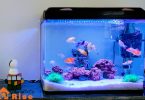
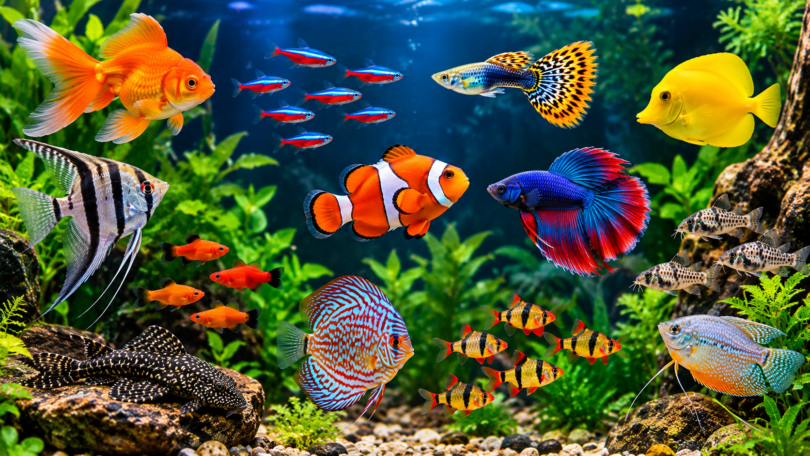
This collection of tropical fish species is built on a foundation almost everyone recalls: their first fish Aquarium. Mine was a small glass box on a shelf, a bag of fish drifting in the water, and a lot of hope. The hobby rewards people who start simple, and it trains people who buy on impulse because a fish looked pretty under the shop lights.
It’s for that first tank. Each fish below comes with its size, its looks, and a plain-spoken note on how it behaves at home. Family groups the fish, so you can see which ones share habits and which ones will get along. Take your time, read the group notes, and pick fish that suit your tank instead of squeezing your tank around the fish.
Bring home your fish in small Groups, with about two weeks between each one. Your filter needs time to build up the helpful bacteria that break down waste. Fish added too quickly often get ill in the first several weeks, and it usually isn’t the fish’s fault.
Discover easy-care fish that thrive and brighten up any home aquarium.
1 - Betta Fish
Species Overview
Length: 2.5 To 3 Inches (6 To 7.5 Centimeters)
Physical Characteristics: Flowing, Ruffled Fins On A Sturdy Little Body. Males Carry The Showy Tails, While Females Are Smaller With Shorter Fins. Colors Include Red, Blue, Teal, White, And Marbled Mixes.
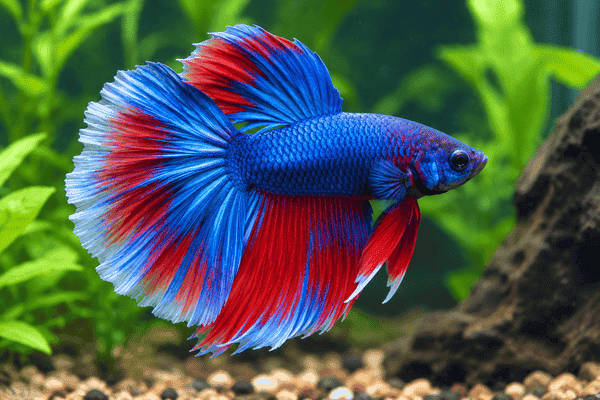
Bettas have plenty of attitude, and they back it up with real personality. Many of them learn the face of the person who feeds them and swim to the glass whenever you walk by. Some even flare their gills and dance when they see their own reflection. A male is best kept alone, since two males will fight until one is badly hurt, and even a female may not accept every tank mate you offer.
Because bettas are tropical, they need a heated tank of at least 5 gallons, held steady around 78 to 80°F, with soft plants to rest on and very gentle water flow. Their long fins tire easily in strong current, so sponge filters or baffled filters work well. Feed only what they can finish in about three minutes, once or twice a day, and remove any leftovers, since overfeeding is the most common mistake with this fish.
2 - Dwarf Gourami
Species Overview
Length: 2 To 3 Inches (5 To 7.5 Centimeters)
Physical Characteristics: Oval, Compact Body With Thin, Thread-Like Feelers In Place Of Pelvic Fins. Males Are Vivid Blue And Red, While Females Are Plain Silver.
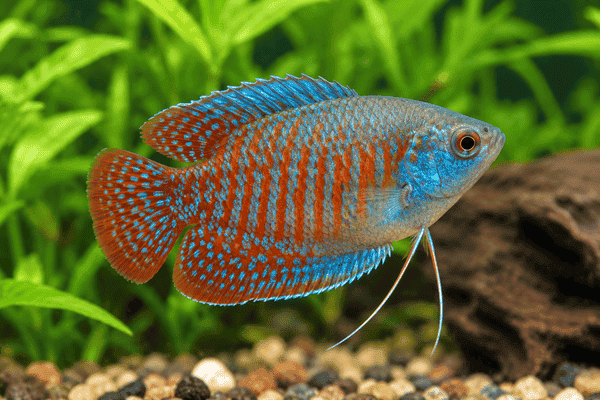
Dwarf gouramis drift through the plants and poke at anything new, using their feelers almost like fingers. They are peaceful with other calm fish, but males can squabble, so one male per tank is the safest plan. A shy gourami will often hide for the first few days, which is normal while it settles in.
Floating plants and soft filtration keep them relaxed, and a tank of 10 gallons or more suits a single pair. Buy from a shop you trust and quarantine new fish if you can, because some commercial stock carries a disease that is hard to treat. Offer flakes, small pellets, and the occasional frozen treat.
3 - Honey Gourami
Species Overview
Length: 2 To 2.5 Inches (5 To 6 Centimeters)
Physical Characteristics: A Soft Golden-Yellow Body. Males Can Darken To A Deep Orange Or Show A Dark Belly Stripe When Breeding.
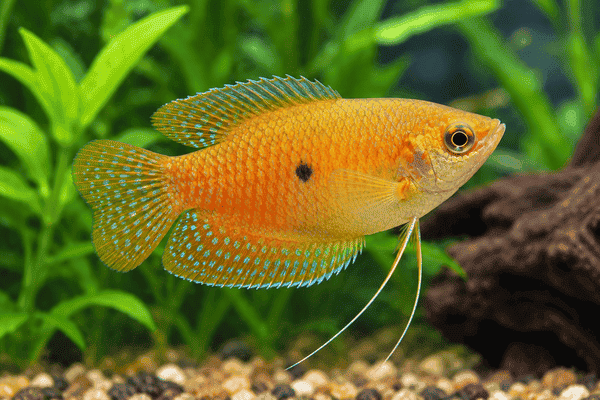
Honey gouramis are the gentle souls of the group, happy to share a tank with small, quiet fish. They tend to hover near plants and rarely cause any trouble. Compared with other gouramis, they are less likely to bully, which makes them an easy first choice.
A planted 10-gallon tank suits them nicely, ideally with a few floating plants where they can rest and build bubble nests. Offer small flakes, micro-pellets, and an occasional frozen treat such as daphnia. Avoid keeping them with fast, boisterous fish that may steal their food.
4 - Pearl Gourami
Species Overview
Length: 4 To 5 Inches (10 To 12 Centimeters)
Physical Characteristics: A Long, Graceful Body Covered In Pearl-Like Dots, With A Dark Stripe From Head To Tail And Trailing Whisker Fins.
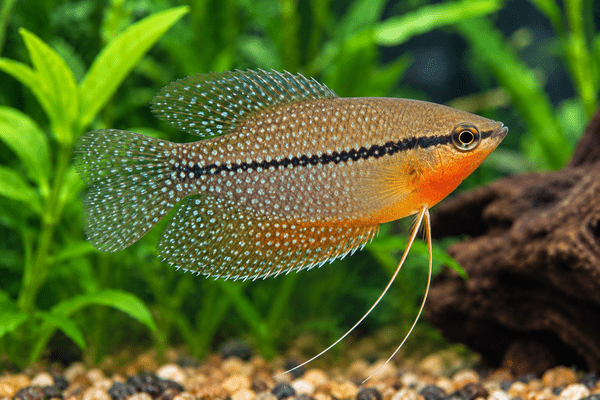
Pearl gouramis are big but mild, gliding through the tank in slow motion. They make a lovely centerpiece for a peaceful society and usually ignore tank mates of similar size. Males show a warm orange-red chest during breeding, which is one of the Kindest Views in the hobby.
Give them at least 30 gallons and plenty of plants to break up the view, since they feel safer with cover. Skip fin-nippers, because those long fins are an easy target. They eat flakes, pellets, and frozen foods, and they will happily pick small bits from the surface.
5 - Guppy
Species Overview
Length: 1.5 To 2.5 Inches (4 To 6 Centimeters)
Physical Characteristics: Males Are Slim And Brightly Patterned With Big, Fan-Shaped Tails. Females Are Larger, Plainer, And Rounder Through The Belly.
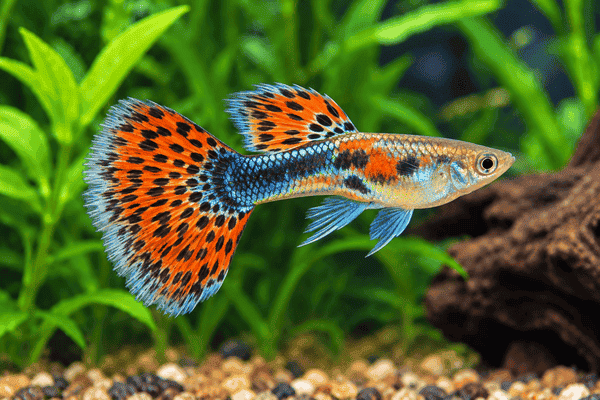
Guppies spend all day looking around, nosing into every corner as if they were checking the tank for concealed treasure. They are friendly with peaceful neighbors, and the males put on Continuous displays for the females. Because each fish has a different pattern, no two guppies look fairly the same.
Keep more females than males so the boys don’t wear anyone out, and use a tank of at least 10 gallons. They take most flake foods and like hard, slightly alkaline water around 76 to 82°F. Avoid fin-nippers, since the males’ big tails are easy targets.
6 - Platy
Species Overview
Length: 2 To 3 Inches (5 To 7.5 Centimeters)
Physical Characteristics: A Rounded, Compact Body With A Short Tail. Colors Include Orange, Red, Yellow, Black, And Spotted Mixes.
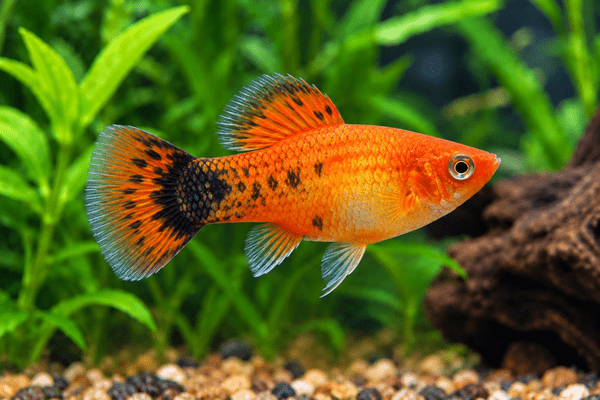
Platies are laid-back and sociable, getting along with almost any peaceful fish. They hover around mid-level and keep to themselves, which makes them one of the least stressful fish you can own. Their sturdy build also means they recover well from small mistakes.
They eat almost everything, from flakes to pale vegetables, and they do well in tanks of 10 gallons or more. Like guppies, they breed easily, so be ready for fry. A few plants and a proper male-to-female ratio keep things peaceful.
7 - Molly
Species Overview
Length: 3 To 4.5 Inches (7.5 To 11 Centimeters)
Physical Characteristics: A Sleek, Slightly Arched Body In Jet Black, Silver, Gold, Or Speckled Patterns. Sailfin Types Carry A Tall, Sail-Like Dorsal Fin.
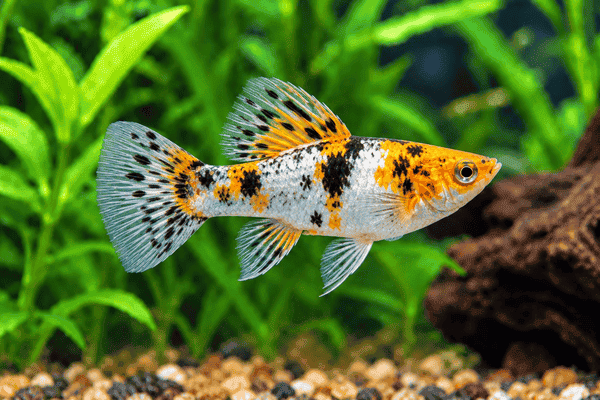
Mollies are lively grazers that nibble on soft algae all day, which also helps keep the tank tidy. They like company, so keep three or more, and they mix well with other peaceful fish. Males can be bossy with females, so a ratio of one male to many females holds the peace.
They prefer harder water and enjoy a little greenery in their diet, like blanched zucchini or spirulina flakes. A 20-gallon tank gives them room to roam. Some mollies tolerate a pinch of aquarium salt, but it is not required, so only add it if you have a reason.
8 - Swordtail
Species Overview
Length: 4 To 5.5 Inches (10 To 14 Centimeters)
Physical Characteristics: A Long, Torpedo-Shaped Body. Males Have A Pointed Tail Extension That Gives The Fish Its Name. Common Colors Are Red, Orange, Green, And Black.
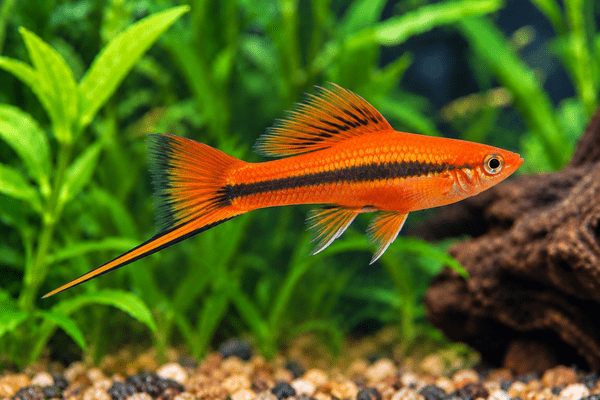
Swordtails are quick swimmers that love open water, and they often race along the length of the tank. Males can bicker, so keep just one male with a few females. They are friendly with most mid-sized peaceful fish but may chase very small ones.
Use a tank of at least 20 gallons with a tight lid, because they jump. They eat flakes, pellets, and small frozen foods without any fuss. Live plants give females a place to escape the males’ attention.
9 - Endler's Livebearer
Species Overview
Length: 1 To 1.8 Inches (2.5 To 4.5 Centimeters)
Physical Characteristics: A Tiny, Streamlined Body. Males Flash Orange, Green, And Black With A Metallic Shine, While Females Are Silvery And Plain.
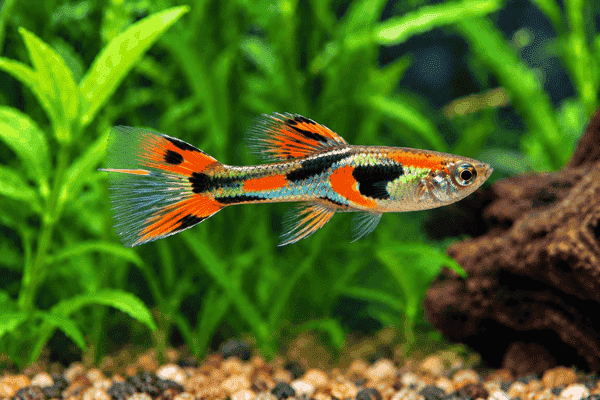
Endlers look like guppies shrunk to pocket size, and they fit nano tanks perfectly. They feel safest in a group with plenty of plants for cover, and a small colony will keep a 10-gallon tank lively. They breed fast, so a few pairs can quickly become a crowd.
Their little mouths need fine flakes or crushed pellets. Stick with small, peaceful tank mates, since bigger fish may eat the babies or the adults. Keep the water clean, because small fish show problems quickly.
10 - Neon Tetra
Species Overview
Length: 1.5 inches (4 centimeters)
Physical Characteristics: Small And Slim, With A Glowing Blue Stripe Along The Body And A Red Band On The Lower Half.
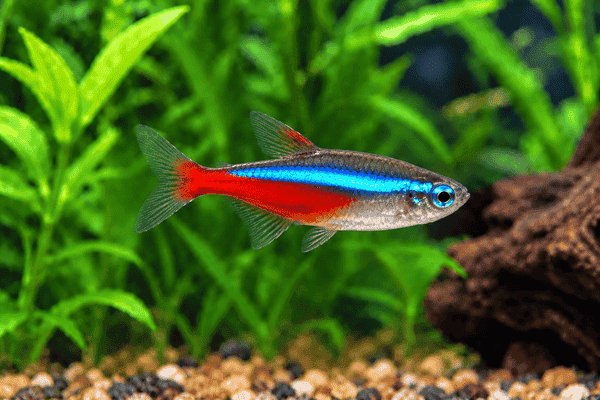
Neon tetras look their best in a school of eight or more, where their stripes flash together. A planted tank with soft lighting makes the glow stand out, and at night they often turn paler as they rest. They are gentle, and a healthy group will rarely bother anyone.
They like soft, slightly acidic water and a steady temperature around 72 to 78°F. Keep them away from large or pushy fish, which will see them as a snack. Add them to a mature tank, since they do not enjoy sudden swings in water quality.
11 - Cardinal Tetra
Species Overview
Length: 2 Inches (5 Centimeters)
Physical Characteristics: Like The Neon Tetra, But The Red Band Stretches The Full Length Of The Belly For A Richer Color.
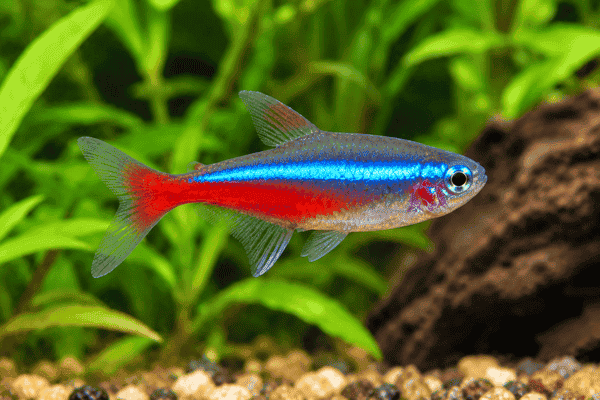
Cardinals are slightly larger and bolder than neons, but they still prefer the peace of a group. Six to ten in a group look striking against dark wood and green plants. Their color is usually deeper, which is why many keepers see them as the “Update” to the neon.
They enjoy warmer water, around 78 to 82°F. Many are wild-caught, so introduce them gently and keep the water spotless. Offer small flakes, micro-pellets, and the occasional frozen meal.
12 - Ember Tetra
Species Overview
Length: 0.8 To 1 Inch (2 To 2.5 Centimeters)
Physical Characteristics: A Tiny, See-Through Body With A Warm Orange-Red Glow That Deepens When The Fish Is Relaxed.
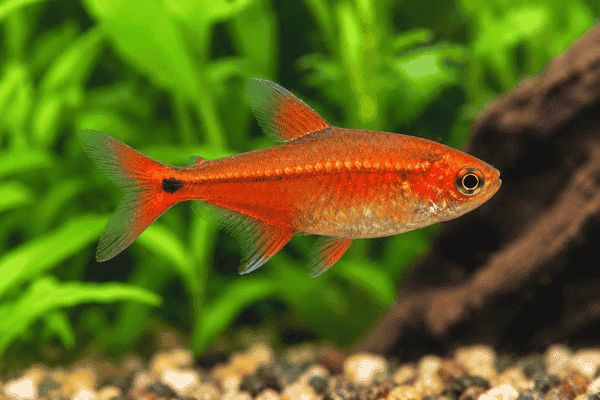
Ember tetras are among the smallest schooling fish around, which makes them ideal for a 10-gallon tank. They are shy and peaceful and swim in a tight, gentle group. A big school against green plants looks like a handful of drifting sparks.
Pair them with other small, calm fish like chili rasboras or pygmy corydoras. Floating plants help them feel secure, and fine food suits their tiny mouths. Avoid large or boisterous neighbors, who will crowd them out at feeding time.
13 - Black Skirt Tetra
Species Overview
Length: 2.5 To 3 Inches (6 To 7.5 Centimeters)
Physical Characteristics: A Tall Body With Dark Vertical Bands And A Smoky, Skirt-Like Anal Fin. Also Sold In White, Gold, And Dyed Varieties.
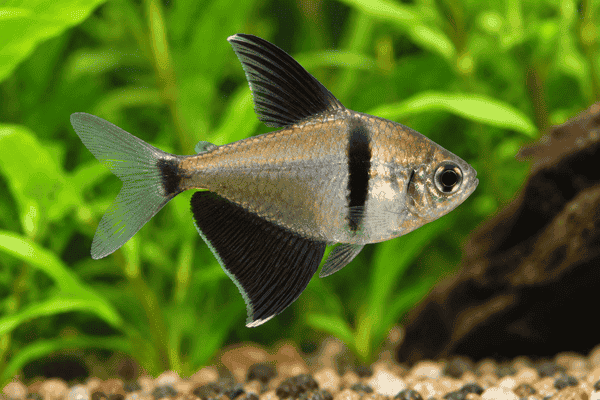
Black skirt tetras are tough and forgiving, which is why they turn up in so many starter tanks. They do best in groups of five or more and are livelier than more delicate tetras. Their size also makes them less likely to be eaten.
They can nip slow, long-finned fish such as bettas and angelfish, so choose neighbors with care. A 20-gallon tank is a comfortable minimum. Feed flakes, pellets, and a few frozen foods to keep them in good color.
14 - Lemon Tetra
Species Overview
Length: 1.5 To 2 Inches (4 To 5 Centimeters)
Physical Characteristics: A Pale Yellow, See-Through Body With A Bright Red Eye And A Black-Edged Anal Fin.
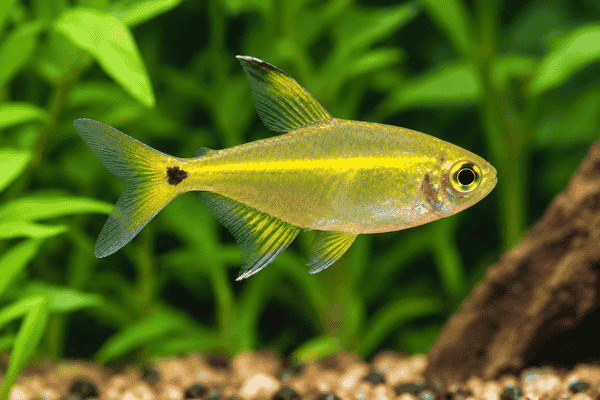
Lemon tetras are soft, gentle fish that look lovely against a dark background. They stay at mid-level and drift in relaxed groups. Their color deepens when they are settled and well fed, so a healthy school looks almost golden.
Keep at least six, with some floating or tall plants for cover. They take flakes, small pellets, and frozen daphnia. They prefer calm tank mates and slightly acidic water.
15 - Rummy Nose Tetra
Species Overview
Length: 2 To 2.5 Inches (5 To 6 Centimeters)
Physical Characteristics: A Silver Body With A Vivid Red Nose And A Black-And-White Striped Tail.
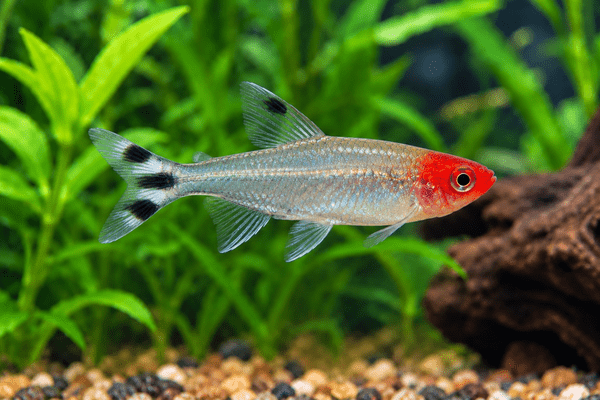
Rummy nose tetras swim in remarkably tight schools, almost like one animal. A fading red nose is often an early sign of stress or dirty water, so many keepers treat them as a living water test. Their synchronized movement is a real highlight in a planted tank.
They like warm, soft, clean water and a group of at least eight. They suit a calm tank better than a crowded one, and they do not enjoy rough neighbors. They can be fussy, so they work best for keepers who already test their water often.
16 - Bloodfin Tetra
Species Overview
Length: 2 To 2.5 Inches (5 To 6 Centimeters)
Physical Characteristics: A Silvery Body With Bright Red Fins And A Slightly Flattened Look.
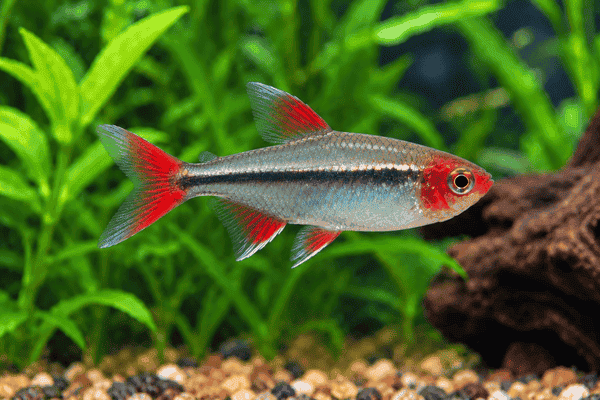
Bloodfin tetras are sturdy, energetic fish that handle a wider range of conditions than most of their cousins. They make a safe pick for a first community tank, and they are quick to learn feeding times. They also tolerate slightly cooler temperatures than many tetras.
Keep six or more in a 20-gallon tank or larger. They sometimes nip fins, so avoid very slow tank mates. A mix of flakes and frozen foods keeps their red fins bright.
17 - Glowlight Tetra
Species Overview
Length: 1.5 Inches (4 Centimeters)
Physical Characteristics: A Slim, Translucent Body With A Glowing Orange-Red Line From The Eye To The Tail.
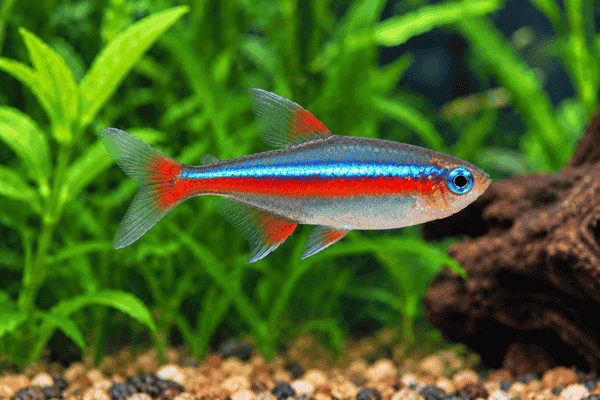
Glowlight tetras add a soft, warm shimmer to a planted tank. They are calm, hardy, and easy to feed, and they rarely bother other fish. In a group, they swim at mid-level in a loose, relaxed school.
Keep at least six, along with other small, peaceful fish. They like dim lighting and floating plants for cover. Small flakes and micro-pellets keep them well fed.
18 - Zebra Danio
Species Overview
Length: 2 To 2.5 Inches (5 To 6 Centimeters)
Physical Characteristics: A Slim Silver Body With Horizontal Blue Stripes From Gills To Tail. Long-Finned And Golden Versions Are Also Common.
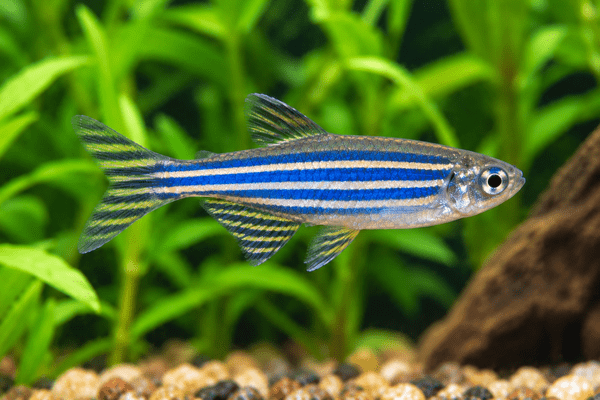
Zebra danios barely rest. They form loose, speedy schools of six or more around the upper half of the tank and handle a wide range of temperatures. They are a classic choice for new tanks because they stay hardy while the filter is still maturing.
They eat almost anything and cope well with the swings of a young tank. Choose peaceful neighbors, because their constant motion can stress very shy fish. Use a tight lid, since they sometimes leap when startled.
19 - Harlequin Rasbora
Species Overview
Length: 1.5 To 2 Inches (4 To 5 Centimeters)
Physical Characteristics: A Copper-Pink Body With A Black, Wedge-Shaped Patch Near The Tail.
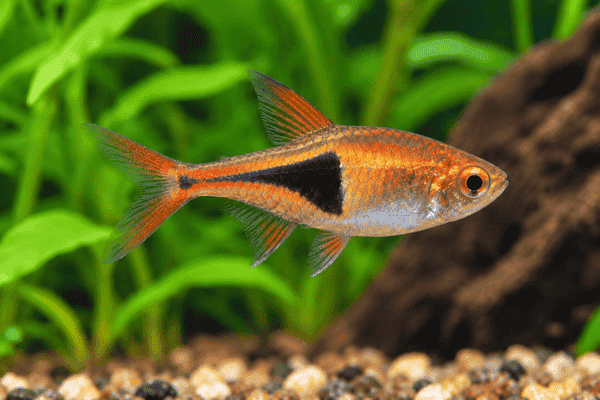
Harlequin rasbora remain close as a group and rarely cause trouble. They get along with nearly every calm fish, and their warm color looks good among green plants. They are a classic community fish for good Cause.
They like planted tanks with soft, slightly acidic water. Feed small pieces or micro-pellets, and keep a group of at least eight so they act naturally. A tank of 15 gallons or more gives them space to school.
20 - White Cloud Mountain Minnow
Species Overview
Length: 1.5 Inches (4 Centimeters)
Physical Characteristics: A Slim, Olive-Brown Body With A Shimmering Blue-Green Line And Red-Tipped Fins.
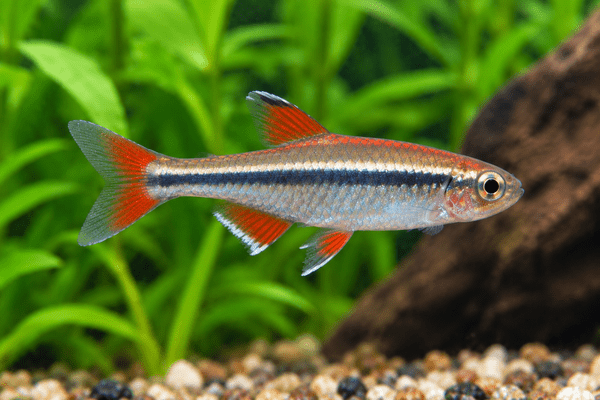
This little minnow copes with cooler water better than most fish here, so it works in rooms without a heater. It also does fine in standard tropical setups. Its quiet, steady nature makes it a good pick for people who do not want a lot of drama.
Keep six or more, with some open water to swim in. They are peaceful and eat flake food without complaint. They also breed readily if the tank has fine-leaved plants.
21 - Celestial Pearl Danio
Species Overview
Length: 1 To 1.5 Inches (2.5 To 4 Centimeters)
Physical Characteristics: A Dark Blue-Gray Body Covered In Pale Spots, With Orange Bars On The Fins.
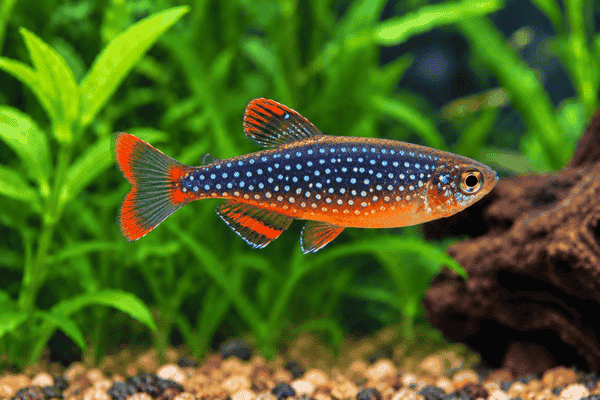
Also called the galaxy rasbora, this tiny fish looks like a night sky in miniature. It is shy at first but calm in a quiet, planted tank. Males show brighter colors and will spar softly with each other, Minus causing harm.
Keep six or more, with only small tank Friends. It likes slightly cooler tropical water and needs tiny food like micro-pellets and baby brine shrimp. A peaceful, well-planted tank brings out its best Actions
22 - Cherry Barb
Species Overview
Length: 1.5 To 2 Inches (4 To 5 Centimeters)
Physical Characteristics: A Slim, Reddish Body, Especially In Males, With A Darker Stripe Along The Side.
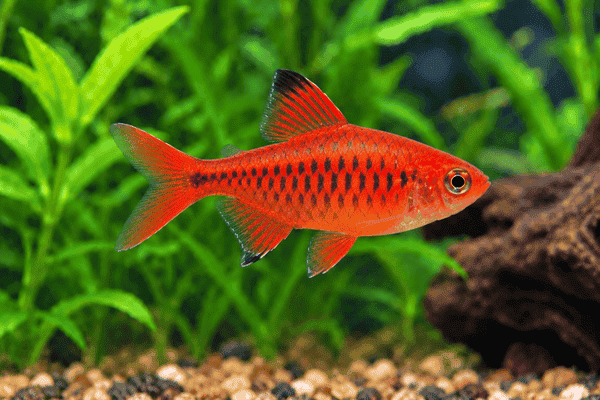
Unlike many barbs, cherry barbs are mild and a little shy. They are a smart pick if you want a Splash of red without the nipping. Males turn a deep cherry red when they are glad and ready to breed.
Keep a small group with more females than males. They prefer a planted tank with hiding spots and moderate water flow. A tank of 15 gallons or more suits them well.
23 - Gold Barb
Species Overview
Length: 3 Inches (7.5 Centimeters)
Physical Characteristics: A Golden Body With Dark Patches Along The Sides And A Metallic Shimmer.
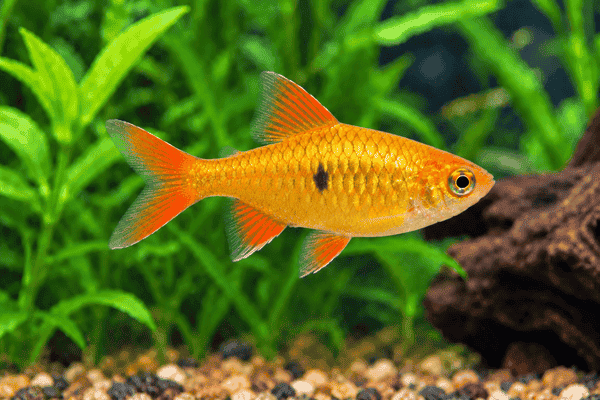
Gold barbs are lively and sturdy, and they tolerate slightly cooler water than many tropical fish. They are best in groups of six or more. Their warm color adds a different tone to a tank full of silver and blue fish.
They do well in planted tanks and accept all kinds of food. Keep them away from slow, long-finned fish, which they may harass. Give them a 20-gallon tank or larger with open swimming space.
24 - Corydoras Catfish
Species Overview
Length: 2 To 3 Inches (5 To 7.5 Centimeters)
Physical Characteristics: A Rounded, Armored Body With A Short Snout And Whisker-Like Barbels. Patterns Include Speckled, Striped, And Bronze.
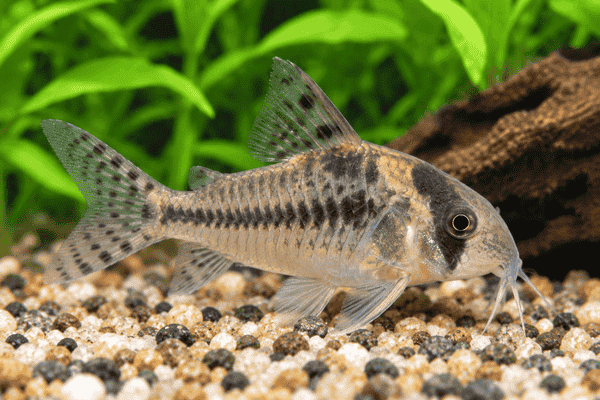
Corydoras scoot along the bottom, sifting through the sand for leftover pieces. They are social and need a group of at least four to feel comfortable. Now and then, they dart to the top for a gulp of air, which is normal and not a sign of trouble.
Use fine sand or smooth gravel to protect their sensitive barbels. Feed sinking pellets or wafers, since little reaches them from the surface. They are gentle and mix well with nearly any peaceful fish.
25 - Bristlenose Pleco
Species Overview
Length: 4 To 5 Inches (10 To 13 Centimeters)
Physical Characteristics: A Flat, Armored Body In Brown Or Mottled Tones. Males Grow Fleshy Bristles On The Snout.
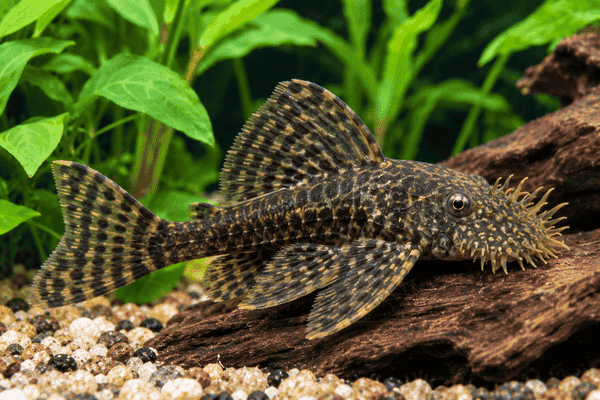
Bristlenose plecos stay far smaller than the common pleco, which grows huge. They hide through the day and come out at night to scrape algae. Males with their bushy snouts are quite funny to look at.
Give them driftwood to chew on and a cave to rest in. Add algae wafers and fresh vegetables to their diet, since they need more than just tank algae. A 20-gallon tank is a good starting size.
26 - Kuhli Loach
Species Overview
Length: 3 To 4 Inches (7.5 To 10 Centimeters)
Physical Characteristics: A Thin, Eel-Like Body With Dark Brown Bands Over A Pink Or Yellow Base.
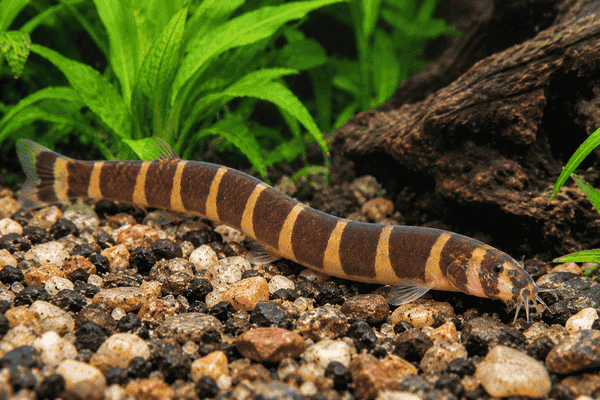
Kuhli loaches are shy, nocturnal fish that slip between plants and under ornaments. You may often see them at first, but they grow bolder over time, especially when they are in a group. Feeding them after the lights go down often carries them out.
Keep a group of four or more on soft sand, with plenty of hiding places. Cover the tank well, because they can squeeze through small gaps. They are peaceful and safe with small fish.
27 - Otocinclus
Species Overview
Length: 1.5 To 2 Inches (4 To Centimeters)
Physical Characteristics: A Small, Slim Body With A Sucker-Style Mouth And A Dark Stripe Along The Side.
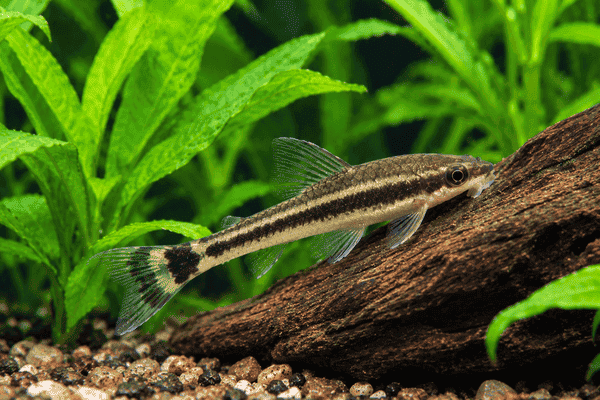
Often called “otos,” these gentle algae eaters cling to glass, leaves, and decorations. They work best in settled tanks that already have a little natural algae. They are quiet fish that spend their day grazing in small groups.
They are sensitive to poor water, so add them to a mature tank, not a new one. Keep at least three and offer blanched vegetables as a supplement. Do not rely on algae alone, because many starve in very clean tanks.
28 - Siamese Algae Eater
Species Overview
Length: 5 To 6 Inches (13 To 15 Centimeters)
Physical Characteristics: A Long, Slim Body With A Black Stripe From Nose To Tail On A Silvery-Gold Background.
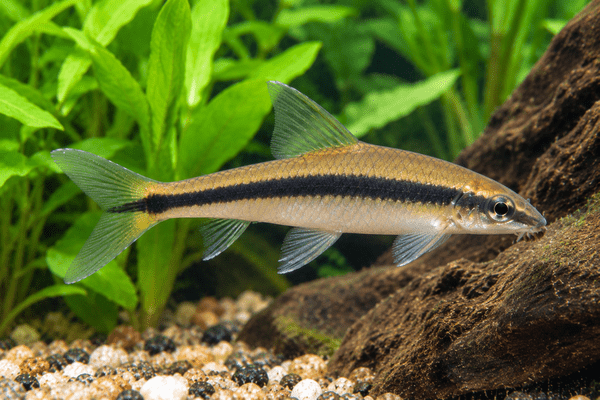
Siamese algae eaters are among the few fish that tackle certain stubborn algae. Check that you are buying a true Siamese, since lookalikes ignore algae entirely. A real one is active and always on the move.
They are lively and need 30 gallons or more. Add driftwood and plants, and keep them with other fast, peaceful fish. They also eat flakes and sinking pellets, so they never go hungry.
29 - Boesemani Rainbowfish
Species Overview
Length: 4 To 4.5 Inches (10 To 11 Centimeters)
Physical Characteristics: Split Coloring, With A Blue-Gray Front Half And A Bright Orange Back Half That Grows Richer With Age.
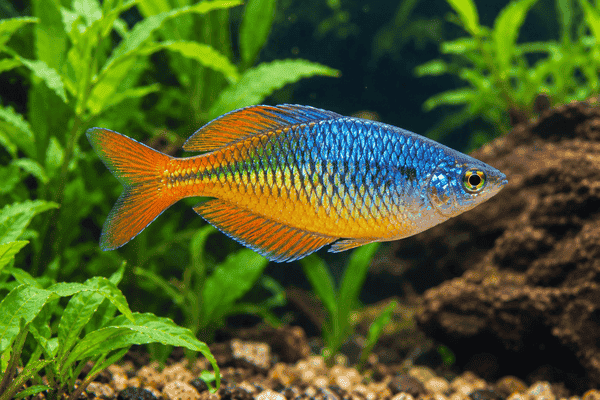
Boesemani rainbowfish are active, social swimmers that look best in a group of six or more. Their color arrives slowly, so juveniles look plain at first. Males compete with each other in a gentle display that brings out their best shades.
They need a longer tank, ideally 30 gallons or more, with open water to swim in. Clean water and a varied diet bring out the best colors. Peaceful, similarly sized tank mates are a good match.
30 - Dwarf Neon Rainbowfish
Species Overview
Length: 2 To 2.5 Inches (5 To 6 Centimeters)
Physical Characteristics: A Slim Body With A Metallic Blue-Green Sheen And A Red Stripe Along The Side. Males Show The Brighter Color.
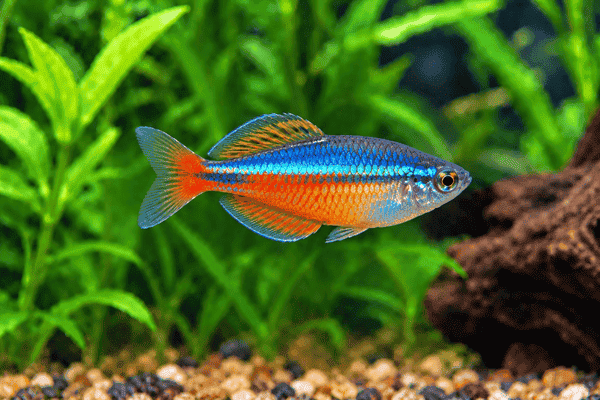
Dwarf neon rainbowfish are small and peaceful, a good way to add color without needing a huge tank. They are active swimmers that shine in a group, and their shimmer changes with the light.
They prefer harder, alkaline water, which pairs well with livebearers. A tank of 15 gallons or more with good filtration keeps them comfortable. Offer small flakes and frozen foods for the best color.
31 - Angelfish
Species Overview
Length: 6 Inches (15 Centimeters) Long, And Up To 8 Inches (20 Centimeters) Tall
Physical Characteristics: A Tall, Triangular Body With Long Trailing Fins. Silver, Marble, Black, And Gold Varieties Are Common.
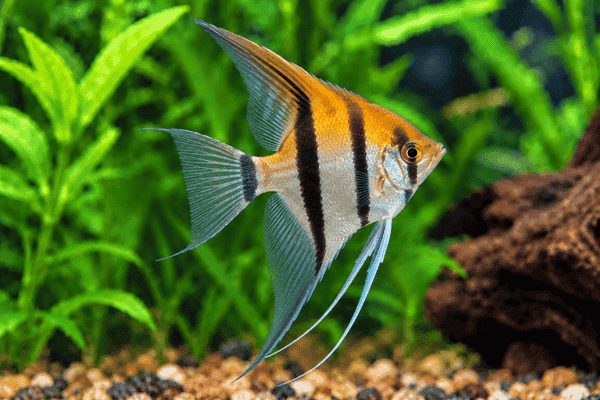
Angelfish glide through the water with a slow, regal movement. They are cichlids, so they may chase smaller tank mates, and tiny fish like neon tetras can become food. Pairs often form and will claim a corner of the tank.
Provide a tall tank of at least 30 gallons, with tall plants or driftwood. Feed a mix of quality flakes, pellets, and frozen foods. Avoid fin-nippers, which will damage their long fins.
32 - German Blue Ram
Species Overview
Length: 2 To 2.5 Inches (5 To 6 Centimeters)
Physical Characteristics: A Compact, Colorful Body With Yellow, Blue, And Black Markings And A Bright Red Eye.
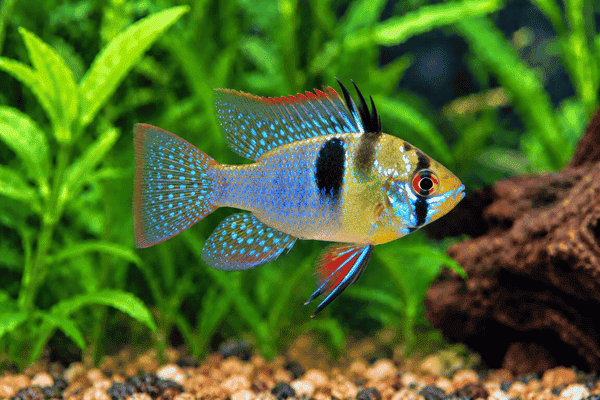
German blue rams are small cichlids with big personalities and gorgeous colors. They are gentler than most cichlids, but they are sensitive to water quality. They often stay near the bottom and claim a small patch of the tank.
Keep them in a mature, warm tank at around 80 to 84°F. They suit keepers who already have a little experience with water testing. Offer small frozen foods and quality pellets, and keep tank mates calm.
Five Minutes a Day That Make You a Better Fish Keeper
Equipment matters less than Routines. The Easiest routine you can build is a five-minute watch each evening, with the lights on and the phone away. Count your fish, look at how they swim, and notice who is eating and who is hiding.
Fish rarely show illness loudly. Clamped fins, faded color, or a fish drifting off alone are quiet hints that something is off, and spotting them early is often the difference between a quick fix and a lost fish. Not a short note on your phone once a week with water readings and any odd behavior. After a month, that little log will teach you more about your tank than any article can.