Scroll through any social feed, and you will notice that colour wins attention. A bird in full plumage looks like a filter that never wears off. Still, bright feathers do not tell you how loud a bird is at 6 a.m., how much it costs to feed, or how many decades it may live. Think of this list as a casual walk through an aviary, where you meet each bird, learn what makes it special, and decide who deserves a place in your home. Here are ten of the brightest, followed by a few you should think about twice.
Explore the brightest avian companions you can keep at home.
1 - Scarlet Macaw
Species Overview
- Length: 31 To 38 Inches
- Weight: 32 To 39 Ounces
- Physical Characteristics: Flaming Red Body, Yellow And Blue Wing Feathers, Bare White Face With Fine Red Lines, Large Pale Upper Beak
The scarlet macaw is the bird most people imagine when they think of brightly colored pet birds, and it earns the attention. The red, yellow, and blue wings look almost unreal in sunlight, and the bird has the confidence to match. Macaws are intelligent, playful, and deeply attached to their people, but they are also huge, strong, and loud. A scarlet can live 40 to 50 years or more, so you are not just buying a pet, you are planning a long partnership. It needs a very large cage or a bird room, tough chewable toys, and several hours out of the cage every day. Neighbours in thin-walled flats will not enjoy the morning calls. For an experienced owner with space and patience, this bird is a showpiece with a big heart.
2 - Blue-and-Gold Macaw
Species Overview
- Length: 30 To 34 Inches
- Weight: 2 To 3 Ounces
- Physical Characteristics: Deep Blue Back And Wings, Golden-Yellow Chest, Green Forehead, White Face Patch With Dark Feather Lines, Black Beak
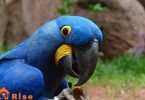
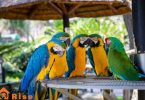
If the scarlet macaw is fire, the blue-and-gold is a sunny sky over the sea. The split between rich blue above and warm gold below makes it one of the most photographed parrots in the world. It is also one of the more approachable macaws, known for learning tricks, copying words, and enjoying company. Like all large parrots, it can live 50 years or more and needs real commitment. Expect a big appetite for fresh vegetables, pellets, and nuts, plus toys that can be destroyed safely. The voice is powerful, especially at dawn and dusk, so think about your living situation first. With early training and daily attention, a blue-and-gold becomes a loyal, goofy companion that thrives on being included in family life.
3 - Sun Conure
Species Overview
- Length: About 12 Inches
- Weight: 4 To 5 Ounces
- Physical Characteristics: Golden-Yellow Body With Orange-Red Face And Belly, Green And Blue Wing Tips, Dark Curved Beak, White Eye Rings
The sun conure looks like a small sunset with wings. Its orange, yellow, and green feathers make it a favourite for people who want a lot of colour in a compact bird. It is playful, cuddly, and curious, and it loves to burrow into pockets, hoods, and blankets. The catch is volume. Sun conures have a sharp, far-carrying call and tend to use it when they are excited or want attention, so they are better for houses than apartments. They live around 25 to 30 years and need daily play, foraging toys, and gentle training to avoid nipping during their teenage phase. A balanced diet of pellets, fresh vegetables, and a few fruits keeps the colours bright. If you can handle the noise, this little sunbeam gives back a lot of love.
4 - Rainbow Lorikeet
Species Overview
- Length: 10 To 12 Inches
- Weight: 3 To 5 Ounces
- Physical Characteristics: Blue Head, Green Back And Wings, Orange-Red Beak, Orange And Yellow Chest With Blue-Purple Banding, Long Pointed Tail
Few birds live up to their name like the rainbow lorikeet. Its feathers blend blue, green, orange, red, and yellow in a way that looks hand-painted. This is a clown in feathers, always bouncing, hanging upside down, and bathing in water dishes. Lorikeets feed on nectar and fruit rather than hard seeds, which means a special liquid or powdered nectar diet and a lot of cleaning, because their droppings are loose and messy. They live about 15 to 25 years and are active birds that need a roomy cage, plenty of toys, and daily interaction. They are also noisy, with sharp chirps and squeaks. The cleanup and diet are not for everyone, but if you can accept the mess, you get one of the liveliest and most colourful pets around.
5 - Eclectus Parrot
- Length: 14 To 17 Inches
- Weight: 14 To 19 Ounces
- Physical Characteristics: Males Are Bright Green With An Orange Upper Beak; Females Are Deep Red With A Purple-Blue Chest And A Black Beak.
The Eclectus is unusual because the male and female look like two separate species. Males wear a leafy green coat with a coral beak, while females glow in red and violet, and the difference once confused early scientists. Beyond looks, this parrot is calm, observant, and gentle, with a soft speaking voice that many owners love. It is quieter than most parrots of its size, which makes it easier to live with. Its lifespan is around 30 to 40 years. Eclectus birds do best on a diet rich in fresh vegetables, leafy greens, and fruit, with fewer artificial colours and additives than a typical seed mix, because they have a longer digestive tract. They dislike sudden changes, so a steady routine helps them feel safe and confident.
6 - Gouldian Finch
Species Overview
- Length: About 5 Inches
- Weight: About 0.5 Ounces
- Physical Characteristics: Purple Chest, Yellow Belly, Green Back, Turquoise Collar, And A Head In Red, Black, Or Yellow
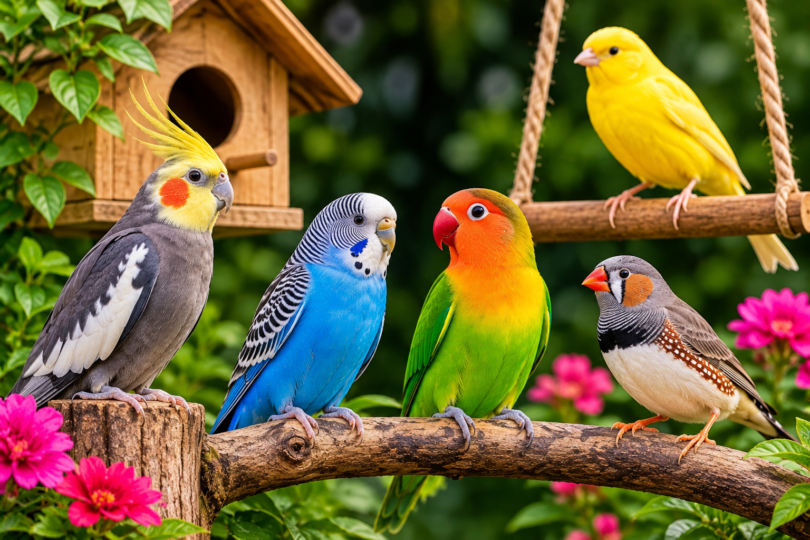
The Gouldian finch is a tiny jewel box. Few birds pack so many colours into such a small body, with patches of purple, green, yellow, and turquoise that sit side by side like stained glass. These finches are gentle, quiet, and best admired rather than handled, which makes them ideal for people who love watching birds more than cuddling them. They live about 5 to 8 years and do best in pairs or small groups, in a wide cage or flight where they can fly freely. They are also more delicate than many finches and need steady warmth, clean water, and a varied diet of seeds, greens, and supplements. With good care, a small flock turns a corner of your living room into a moving work of art.
7 - Rosy-Faced Lovebird
Species Overview
- Length: 6 To 7 Inches
- Weight: 1.8 To 2.2 Ounces
- Physical Characteristics: Green Body, Peach-Pink Face And Throat, Blue Rump, Short Rounded Tail, Pale Horn-Coloured Beak
Lovebirds have a reputation for romance, but the real charm is their confident, cheeky personality. The rosy-faced lovebird has a bright green body, a peachy-pink face, and a blue patch near the tail, and it moves with the energy of a much bigger bird. It is small, affordable, and easy to keep, which makes it popular with first-time owners. A single lovebird needs a lot of daily attention, while a pair will mostly bond with each other, so decide which kind of relationship you want. They live 10 to 20 years and can be sharp-tempered if they feel crowded or bored. Give them shredding toys, a safe place to bathe, and regular time outside the cage. Their calls are loud for their size, but not unbearable.
8 - Budgerigar (Budgie)
Species Overview
- Length: About 7 Inches
- Weight: 1 To 1.4 Ounces
- Physical Characteristics: Wild Type Is Green And Yellow With Black Scalloped Markings; Captive Varieties Include Blue, White, Lutino Yellow, Violet, And Spangled Patterns
Budgies show how much colour a small bird can carry. While the wild type is green and yellow, breeders have produced sky blue, snow white, lemon yellow, and even violet varieties, so you can almost pick a shade to match your room. Beyond looks, budgies are friendly, quiet compared with most parrots, and easy to keep on a modest budget. They live around 5 to 10 years and enjoy company, so a pair or lots of time with their human is best. Some budgies learn a handful of words, and a few have learned hundreds. Offer mirrors, swings, and chewable toys, and keep the cage somewhere the family spends time. For anyone starting out with brightly colored pet birds, a budgie is a happy, practical first choice.
9 - Black-Headed Caique
Species Overview
- Length: About 9 Inches
- Weight: 5 To 6 Ounces
- Physical Characteristics: Black Cap, Bright Green Back And Wings, White Chest And Belly, Orange Thighs And Cheeks, Yellow-Orange Tail Tips
The black-headed caique looks like a tiny bird in a tuxedo that borrowed colours from a box of crayons. The glossy black head, orange cheeks, green wings, and white belly make a bold combination that stands out in any room. Caiques are famous for their humour, hopping sideways, wrestling toys, and even flopping onto their backs to play. They are not for people who want a quiet lap bird, because they are energetic, strong-willed, and can bite when overexcited. They live 25 to 30 years and need a large cage, many toys, and lots of daily play. A calm owner with a sense of humour will find the caique a source of constant entertainment. If you like personality as much as colour, this is a wonderful choice.
10 - Gold-Capped Conure
Species Overview
- Length: About 12 Inches
- Weight: 4 To 5 Ounces
- Physical Characteristics: Bright Yellow Head And Chest, Orange-Gold Belly, Green Back And Wings, Blue Flight Feathers, Grey Beak
Also known as the Jenday conure, this bird brings a mix of sunshine yellow, tangerine orange, and leafy green. It is slightly calmer than the sun conure, though still loud and playful, and many owners find it easier to train. It loves to cuddle, snooze in a warm pouch, and learn simple tricks such as waving or turning in a circle. A gold-capped conure typically lives 25 to 30 years and needs daily out-of-cage time, foraging toys, and a balanced diet of pellets, vegetables, and limited fruit. Expect contact calls throughout the day, usually louder in the morning and evening. This is a good pick for owners who want rich colour and a cheerful, social personality without the size of a macaw.